

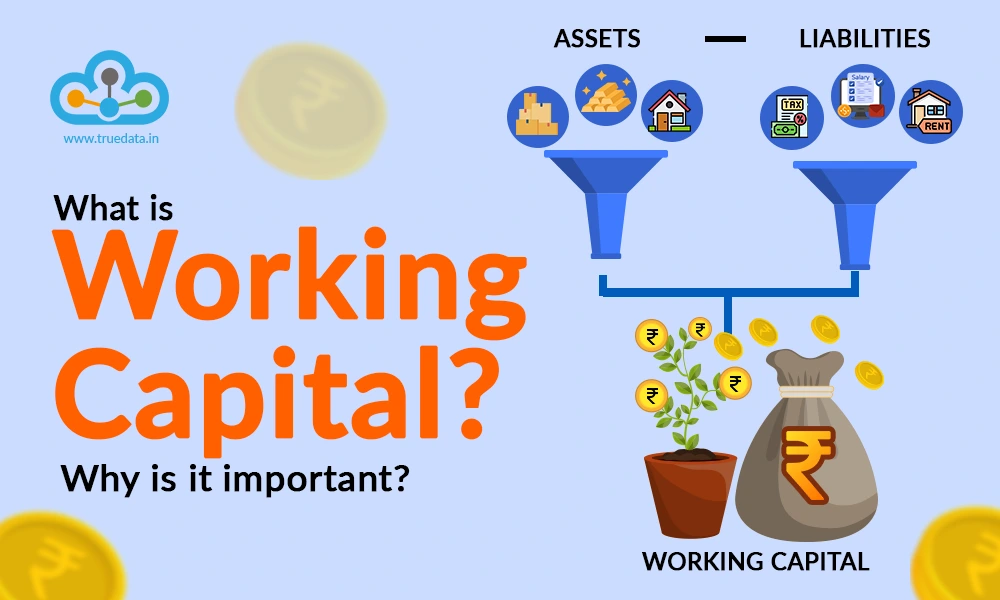
Finance is the grease that is needed to keep the wheels of the business running. While most assume this means the long-term debt needed for growth and expansion, the daily needs of finance are equally vital. This daily need for finances comes under the blanket of short-term financing and is known as working capital. Do you know the meaning of this term and its importance for a company’s financial health? Check out this blog to learn these details and more about working capital to enhance your financial knowledge.
What is working capital?
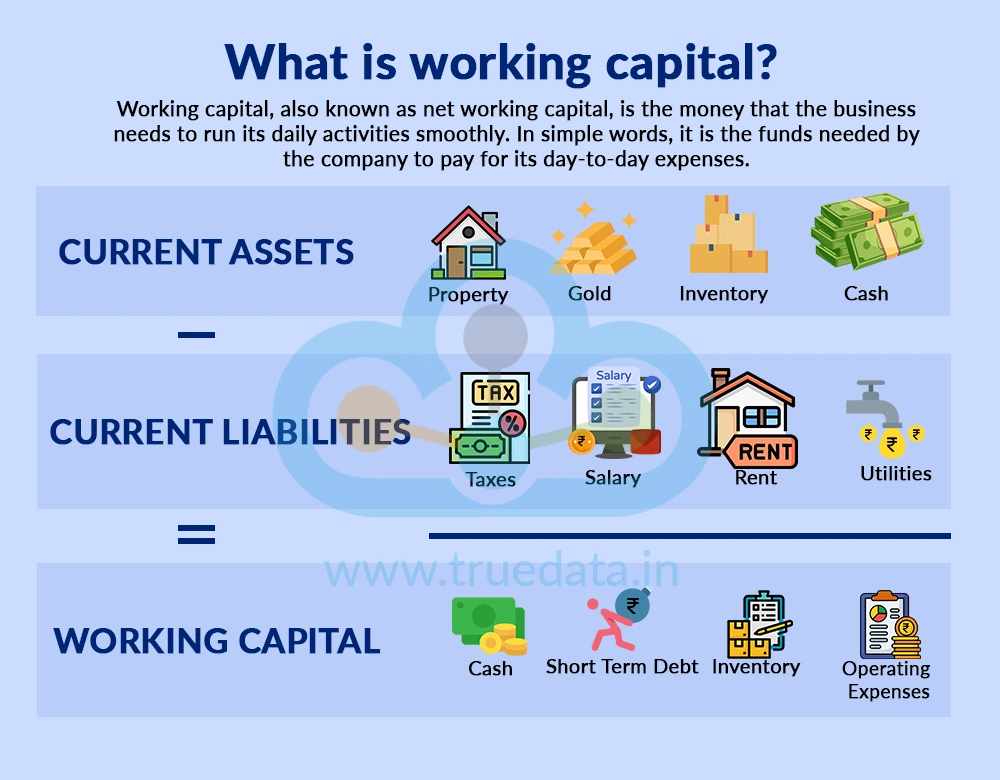
Working capital, also known as net working capital, is the money that the business needs to run its daily activities smoothly. In simple words, it is the funds needed by the company to pay for its day-to-day expenses. It is represented as the difference between what a company owns in the short term (like cash, stock, and money owed by customers) and what it owes in the short term (like payments to suppliers, salaries, and other bills). A company with positive working capital is seen as a sign of good financial health. On the other hand, a company with negative working capital, i.e., more short-term debts than assets, may face problems in running its operations smoothly.
What are the components of working capital?
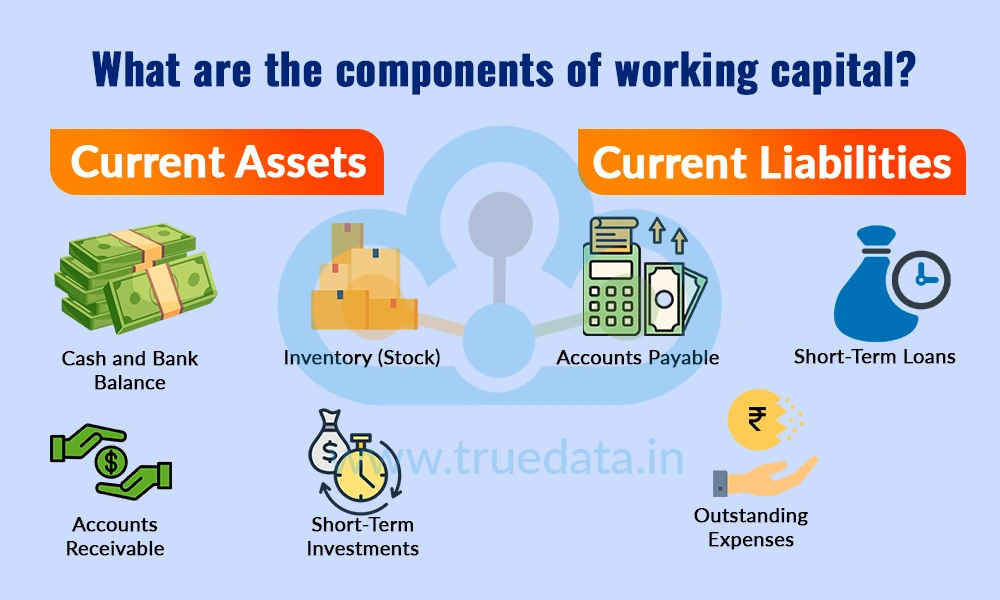
Working capital is broadly classified under two main categories, which are further divided into many components. The details of the same are mentioned below.
Current Assets
These are the things a business owns that can be easily turned into cash within a year. They help the business run its daily operations.
-
Cash and Bank Balance - The money available in hand or the bank to pay for immediate needs like salaries or bills.
-
Accounts Receivable - The money customers owe to the business for products or services already provided.
-
Inventory (Stock) - The goods a business has in store to sell. This includes raw materials, finished goods, or goods in progress.
-
Short-Term Investments - Money invested in things that can be quickly sold or used, like fixed deposits with short terms.
Current Liabilities
These are the short-term debts or bills a business has to pay within a year.
-
Accounts Payable - The money the business owes to suppliers for goods or services it has already received.
-
Short-Term Loans - Loans or borrowings that need to be repaid within a short period, usually within 12 months.
-
Outstanding Expenses - Expenses that the business has used but not yet paid for, such as electricity bills, rent, or employee salaries.
How to calculate working capital?
Working capital is calculated using the two important components of the balance sheet of a company. It is the difference between the current assets and the current liabilities of a company and is represented as under.
Working Capital = Current Assets - Current Liabilities
This formula indicates whether a business has enough short-term resources to cover its short-term debts. A positive working capital means the business can pay its bills and still have money left, which is a good sign. A negative working capital means the business may have trouble paying its immediate expenses.
Let us consider the following example to understand the calculation of working capital.
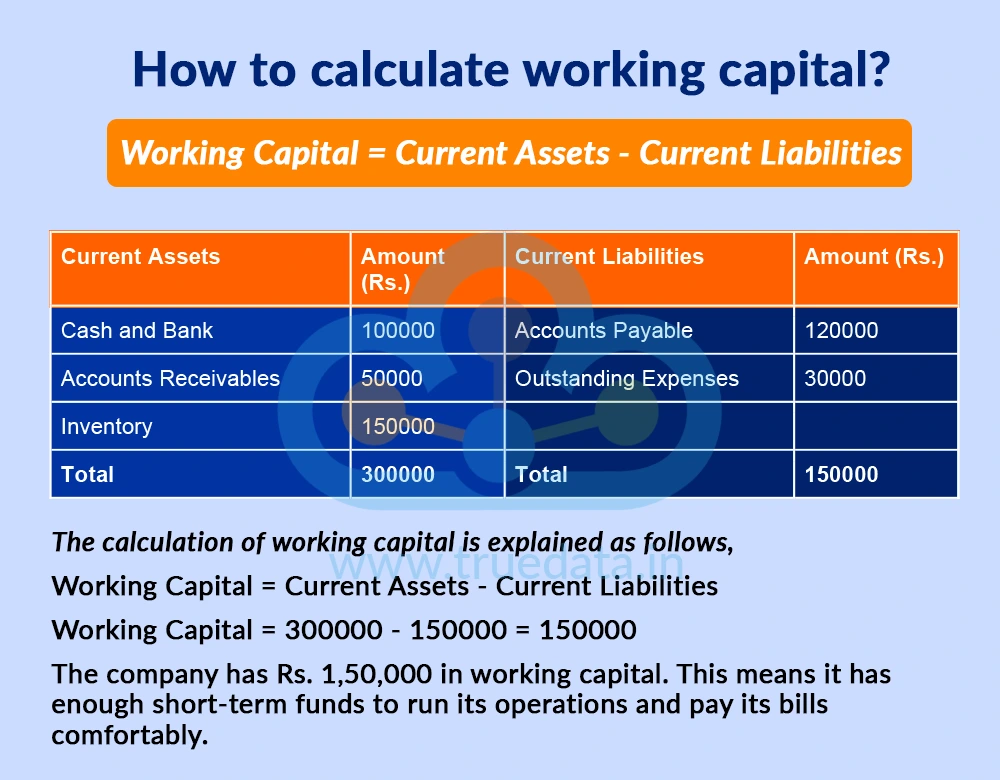
The calculation of working capital is explained as follows,
Working Capital = Current Assets - Current Liabilities
Working Capital = 300000 - 150000 = 150000
The company has Rs. 1,50,000 in working capital. This means it has enough short-term funds to run its operations and pay its bills comfortably.
What are the types of working capital?
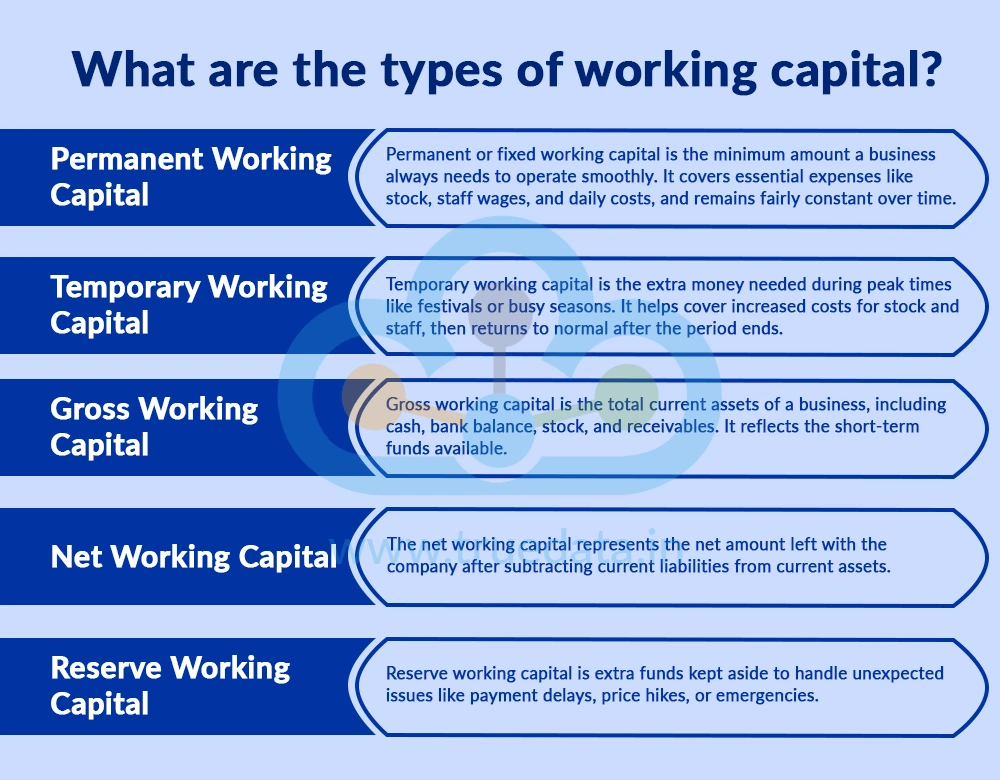
Working capital is not just a single number, it comes in different types based on how it is used in the business. A clear understanding of these types of working capital helps the stakeholders to manage their money more wisely and plan a better financial future. The details of the types of working capital are explained below.
Permanent Working Capital (Fixed Working Capital)
The permanent or fixed working capital is the minimum amount of money a business always needs to keep running smoothly. It is required at all times, whether the business is doing well or not. For example, a shopkeeper always needs some money to buy stock, pay staff, and cover daily expenses. This amount stays more or less the same and does not change much with time.
Temporary Working Capital (Variable Working Capital)
This is the extra money needed to run the business during special times like festivals or peak seasons, when the business expects more sales. For example, a sweet shop may need extra money during Diwali to buy more ingredients and hire more workers. This working capital increases during busy times and goes back to normal thereafter.
Gross Working Capital
The gross working capital represents the total amount of current assets a business owns. It includes cash, bank balance, inventory (stock), and customer payments due. It shows how much short-term money the business has to work with.
Net Working Capital
The net working capital represents the net amount left with the company after subtracting current liabilities from current assets. The standard formula to calculate the net working capital is,
Net Working Capital = Current Assets - Current Liabilities
It shows the actual financial strength of the business in handling its day-to-day needs.
Reserve Working Capital
The reserve working capital is the extra buffer a business keeps aside to handle unexpected problems like delays in customer payments or a sudden rise in raw material costs. For example, a small factory may keep a reserve to handle emergencies like a machinery breakdown or a price hike.
Why is working capital important?
Working capital is an essential financial metric for investors and companies as it shows the financial health of a business and its ability to run its day-to-day operations. The importance of working capital for investors and the company is explained below.
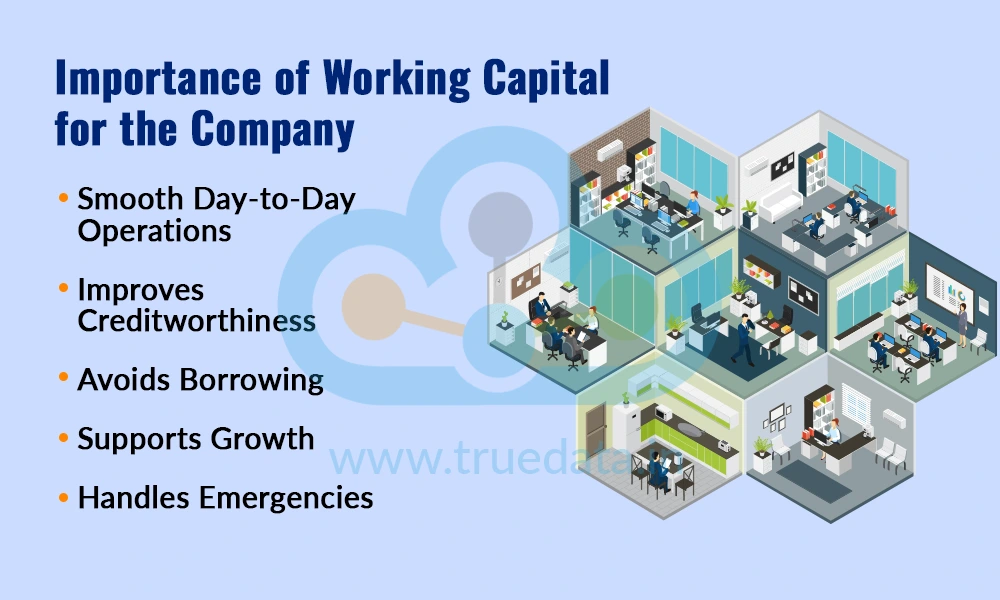
Importance of Working Capital for the Company
-
Smooth Day-to-Day Operations - Working capital helps a business pay for daily needs like buying stock, paying salaries, and paying electricity bills without delays.
-
Better Cash Flow Management - It helps the company manage cash in and out, so it does not run out of money suddenly.
-
Improves Creditworthiness - A company with good working capital pays its bills on time, which improves its reputation and relationship with suppliers and banks.
-
Avoids Borrowing - With enough working capital, the business does not need to take frequent loans for small expenses, saving on interest costs.
-
Supports Growth - A healthy working capital allows the company to grab new opportunities, like bulk purchasing or expanding its operations.
-
Handles Emergencies - It acts as a financial cushion during slow business periods or unexpected expenses like machine repairs or raw material price hikes.
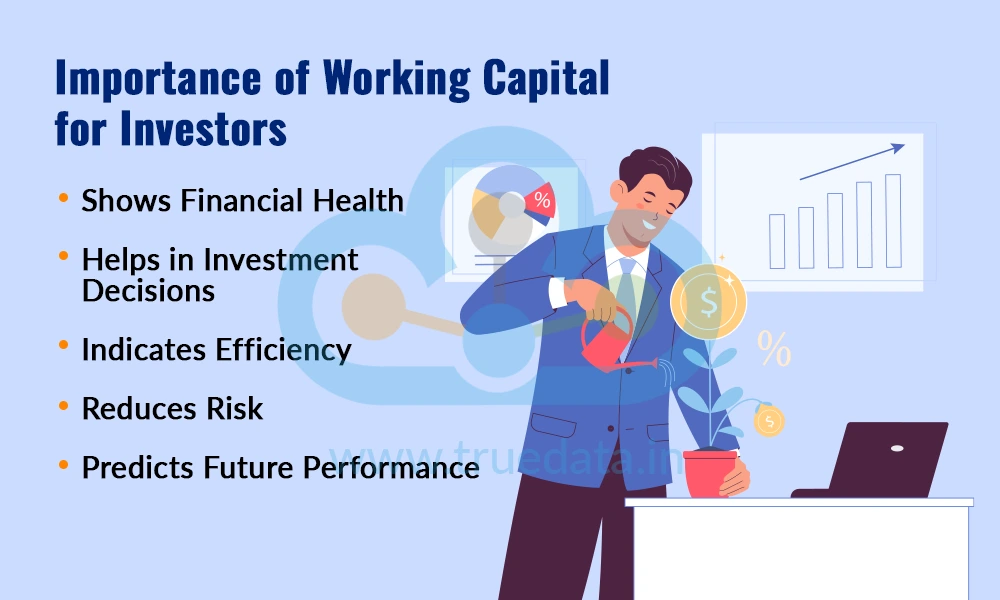
Importance of Working Capital for Investors
-
Shows Financial Health - Investors look at working capital to understand if the company can meet its short-term obligations. A positive working capital is a good sign.
-
Helps in Investment Decisions - If a company manages its working capital well, it is seen as reliable and efficient, which makes it more attractive to investors.
-
Indicates Efficiency - Good working capital management shows the company is using its money wisely and not keeping too much cash idle.
-
Reduces Risk - Investors feel safer investing in a company that has enough working capital to handle unexpected problems and continue operations without stress.
-
Predicts Future Performance - Stable working capital often means stable profits and business performance in the future, which is important for long-term investment planning.
What are the challenges faced in working capital management?
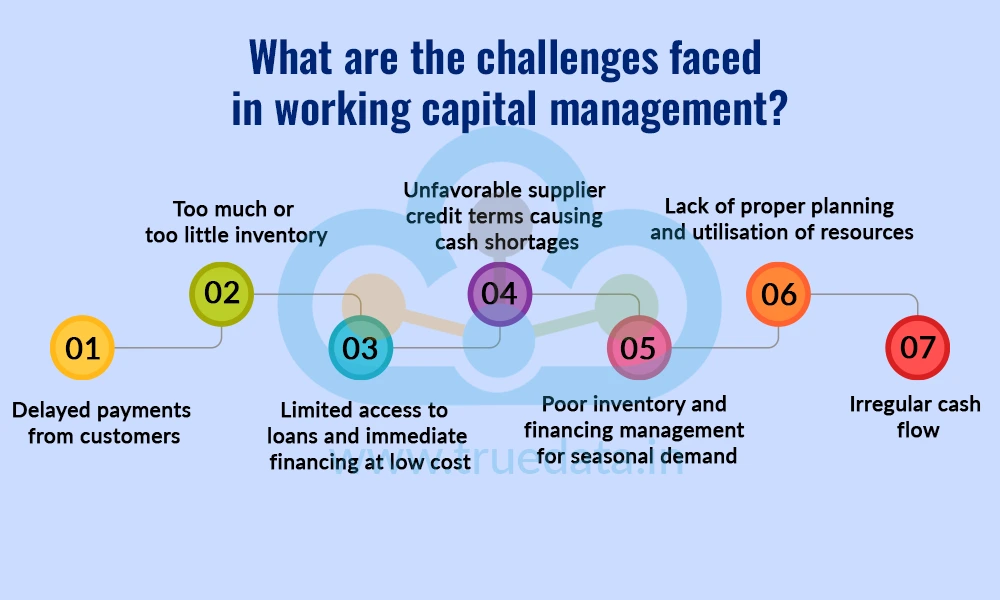
Working capital management is a vital part of maintaining the financial health of an organisation, but not always easy. Many businesses face common problems while trying to balance their cash, stock, and payments. Some of the common challenges faced by organisations in working capital management are highlighted below.
-
Delayed payments from customers
-
Too much or too little inventory
-
Irregular cash flow
-
Poor credit terms with suppliers, which can lead to cash shortages
-
Seasonal demand and unable to manage the inventory and short-term financing to meet that demand
-
Lack of proper planning and utilisation of resources
-
Limited access to loans and immediate financing at low cost
Conclusion
One of the most common and gravest mistakes businesses make is not giving enough focus on the efficiency in working capital management. This can directly impact their financial stability and the long-term viability of the company. Hence, the key to having a successful business also lies in proper planning and monitoring of the working capital and maintaining a healthy balance between income and expenses to handle the day-to-day running of the business efficiently.
This article sheds light on a vital topic of a company’s financial management, the working capital. Let us know your thoughts on the topic or if you have any queries on the same, and we will address them soon.
Till then, Happy Reading!
Read More: What is free cash flow?
Frequently Asked Questions
Nice Post

Thank you so much!
searching of how to do calculation of working capital . I found this blog really helpful
We are glad we could address your query and add quality information to the topic! Stay tuned for more such interesting content on TrueData!
Good topic selection
We are glad you found the topic interesting! Let us know any other topic you would like us to address and we will take it up in our upcoming posts!
Good blog
Thank you Sir!
how one can increase working capital of business
An increase in working capital can be achieved by boosting sales, collecting payments from customers faster, reducing unnecessary expenses, or getting short-term loans. Managing inventory well and delaying payments to suppliers (without harming relationships) can also help. We hope this resolves your query. Keep reading and engaging more with TrueData. We are looking forward to hearing more from you!
What will happen when working capital is negative and it is sustainable
If a business has negative working capital but it is sustainable, it means it can run smoothly even though current liabilities are more than current assets. This is usually in cases where the business gets paid quickly by customers and pays suppliers later, which is common in fast-moving businesses like FMCG or retail. If managed properly, it can reduce the need for borrowing and can boost profits. We hope this resolves your query. Keep reading and engaging with TrueData for more quality content!