


Fundamental analysis is the study or the dissection of the company data into qualitative and quantitative aspects to understand them and make better investment decisions. An important part of this study is the ratio analysis. We have talked in detail about the profitability ratios in our previous blog and now let us take the ratio analysis study further with the Liquidity Ratios. Here is all you need to know about Liquidity Ratios and why they form an important part of the fundamental analysis of companies and stocks.
What are Liquidity Ratios?

Liquidity ratios are financial tools used to measure how easily a company can meet its short-term obligations, such as paying off bills, salaries, or loans that are due soon. These ratios assess whether a company has enough liquid assets, like cash or things that can quickly be converted to cash (such as receivables or inventory), to cover its immediate liabilities. Understanding liquidity ratios is important for companies as they help ensure smooth day-to-day operations without relying too heavily on loans or credit. These ratios are valuable for investors too as they indicate whether a company is financially stable and a viable investment option reducing the risk of insolvency. Thus, maintaining a good balance in these ratios is essential for long-term business success and gaining investor trust.
What are the types of Liquidity Ratios?
Liquidity ratios help businesses and investors understand how well a company can meet its short-term financial obligations. They focus on a company's ability to quickly convert its assets into cash to pay off liabilities due within a year. Here are the top liquidity ratios and their interpretation.
Current Ratio
The current ratio shows the relationship between a company's current assets and current liabilities. It measures whether the company has enough short-term resources to cover its short-term debts.
The formula for the current ratio is,
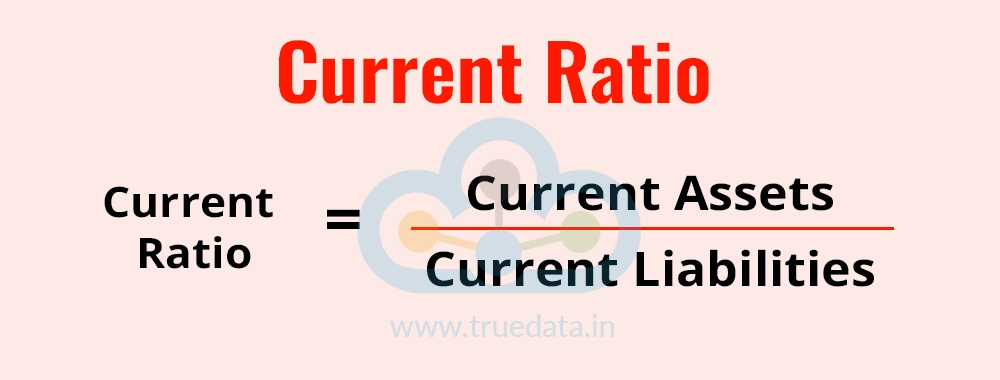
Current Ratio = Current Assets / Current Liabilities
A higher current ratio (e.g., 2:1) means the company is more capable of paying its short-term obligations, which is a positive signal for creditors and investors. On the other hand, a low current ratio (e.g., below 1) suggests the company might struggle to pay off its debts, which could indicate liquidity issues.
Quick Ratio (Acid-Test Ratio)
The quick ratio focuses on the most liquid assets, excluding inventory and other items that might take time to convert into cash. It provides a stricter measure of a company's liquidity than the current ratio. This ratio is particularly useful in industries where inventory may not be quickly sold, like heavy machinery or real estate.
The formula to calculate the quick ratio is,

Quick Ratio = Quick Assets / Current Liabilities
Where,
Quick Assets = Current assets - Inventory - Prepaid expenses
Or
Quick Ratio = (Cash and Equivalents + Marketable Securities + Accounts Receivable) /
Current Liabilities)
A quick ratio of 1 or higher indicates that the company can pay its short-term liabilities without relying on inventory sales. However, a quick ratio lower than 1 indicates that the company may have difficulty in meeting its obligations promptly.
Cash Ratio
The cash ratio measures the company's ability to cover short-term liabilities with only its cash and cash equivalents (e.g., bank balances, treasury bills, etc.). This is the most conservative liquidity measure, as it assumes no reliance on receivables or inventory.
The formula to calculate the Cash Ratio is given below.

Cash Ratio = Cash and Cash Equivalents / Current Liabilities
A high cash ratio (e.g., 1 or more) is a sign of strong liquidity, but an excessively high value might indicate that the company is not investing its cash effectively. On the other hand, a low cash ratio could signal liquidity concerns, especially if other liquidity ratios are also weak.
Operating Cash Flow Ratio
This ratio is the measure of the ability of the company’s core business operations to generate enough cash to cover short-term liabilities. This makes it a practical approach to assess the financial viability of a company and its future.
The formula to calculate the Operating Cash Flow Ratio is,

Operating Cash Flow Ratio = Operating Cash Flow / Current Liabilities
A higher operating cash flow ratio indicates that the company generates ample cash from operations to meet its liabilities. Similarly, a lower operational cash flow ratio indicates that the company is overly reliant on financing or asset sales to meet obligations.
Working Capital Ratio
The working capital ratio is not a liquidity ratio in the traditional sense but a measure of absolute liquidity. It calculates the surplus or deficit of current assets over current liabilities. It is a reflection of the company’s operational efficiency and financial health.
The formula to calculate the Working Capital Ratio is,
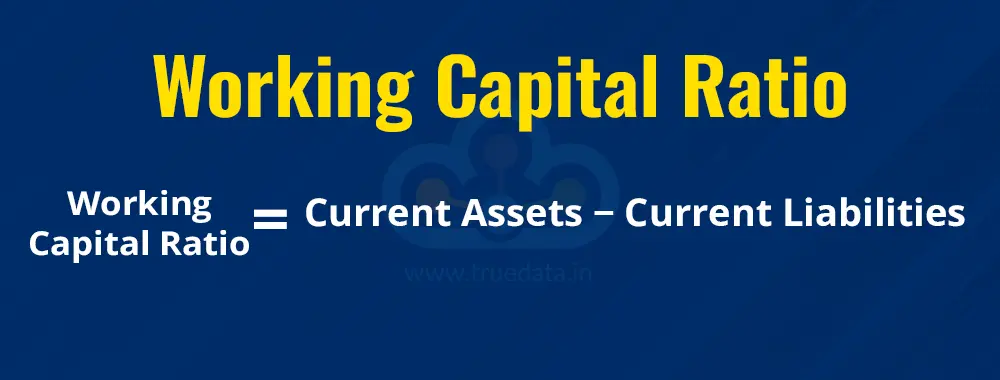
Working Capital Ratio = Current Assets − Current Liabilities
A positive working capital ratio indicates that the company has more current assets than current liabilities, which is a good sign of liquidity. Similarly, negative working capital suggests potential liquidity issues as the company might struggle to cover its short-term obligations without additional funding.
Inventory to Working Capital Ratio
This ratio measures the proportion of a company’s working capital that is tied up in inventory. A high reliance on inventory can make liquidity riskier since inventory is less liquid compared to cash or receivables.

The formula to calculate the Inventory to Working Capital Ratio is,
Inventory to Working Capital Ratio = Inventory / Working Capital
A lower inventory to working capital ratio indicates less dependence on inventory, which is favourable for liquidity. A higher inventory to working capital ratio suggests the company relies heavily on inventory, making it vulnerable if inventory sales slow down.
Why are Liquidity Ratios Important?

The use of liquidity ratios provides information on the liquidity position of the company and its financial viability in meeting short-term obligations. However, these ratios provide vital information for analysis not only for companies but also for investors.
Here is a brief analysis of the importance of liquidity ratios for investors and companies.
For Companies
-
Ensures smooth day-to-day operations by maintaining sufficient short-term funds.
-
Highlights potential liquidity challenges, enabling proactive corrective actions.
-
Demonstrates financial health to suppliers and creditors, enhancing credit terms.
-
Supports decision-making regarding asset utilisation and debt management.
-
Helps maintain a balance between having too much idle cash and insufficient liquidity.
For Investors
-
Acts as a tool to assess the short-term financial risk of a company.
-
Offers a way to compare the financial health of different companies in the same industry.
-
Indicates whether a company can handle unexpected financial demands without compromising stability.
-
Helps in identifying companies with efficient cash flow and asset management.
-
Reduces uncertainty by highlighting strong or weak liquidity, aiding better investment decisions.
Conclusion
Liquidity ratios are essential financial tools that measure a company’s ability to meet its short-term obligations and maintain financial stability. They are an essential aspect of fundamental analysis of stocks allowing investors to make informed investment decisions in shaping their portfolio based on their risk tolerance and investment goals.
This article is a continuation of our series on ratio analysis which is part of our bigger segment on fundamental analysis of companies and stocks. Let us know if you have any queries on this topic and watch this space for more blogs from this segment.
Till then Happy Reading!
Read More: Red Flags to Watch Out for While Analysing a Company’s Stock
Frequently Asked Questions
Great Blog. How can investors determine whether a company’s liquidity ratio indicates a healthy financial position or an inefficient use of its current assets?

Thank you for the great question! A liquidity ratio should ideally be compared with industry peers, the company’s own historical levels, and the nature of its business rather than judged by a single number. A very low ratio may signal difficulty meeting short-term obligations, while an unusually high ratio could sometimes indicate that current assets are not being used efficiently. We hope this perspective helps investors assess liquidity alongside profitability, cash flows, and overall financial health.
Understanding liquidity ratios can provide a better picture of whether a company can comfortably meet its short-term obligations.
Absolutely. Liquidity ratios are useful indicators for assessing a company’s ability to meet its short-term obligations and can provide valuable insight into its financial stability. Thank you for sharing your perspective.
I found the explanation of current ratio and quick ratio particularly useful. The article makes it much easier to understand how liquidity ratios can help investors assess a company’s short-term financial health.
Thank you for your feedback. We are glad to know that the explanation of current and quick ratios helped make liquidity analysis easier to understand. We appreciate your support and are happy you found the article useful.
i searched many blogs, this one much better. :) Thanks for sharing this basics of liquidity ratios
Happy to hear such wonderful feedback! Thank you! Stay tuned to learn more about such fundamental concepts in a simplified manner.
what is the best liquidity ratio
The best and the most popular liquidity ratio is the current ratio and also often the starting point for liquidity analysis of a company. A good current ratio is usually around 1.5 to 2. We hope this resolves your query. Thank you for reaching out to us and stay connected to TrueData for more valuable insights on fundamental analysis of a company.